TRACK-BY-TRACK: OF MONSTERS AND MEN TAKE US THROUGH 'ALL IS LOVE AND PAIN IN THE MOUSE PARADE'
Listen to the album below!

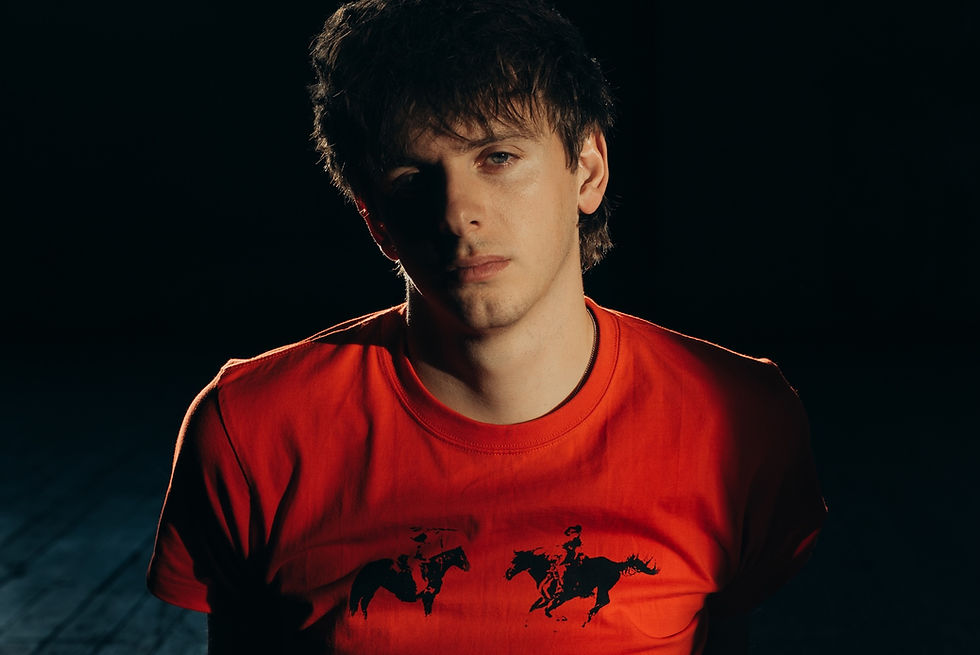
Image: Eva Schram.
Icelandic band Of Monsters and Men have shared their fourth studio album, All Is Love and Pain in the Mouse Parade. To celebrate the release, the band are taking us through the collection of songs track-by-track...
TELEVISION LOVE
Ragnar Þórhallsson: Television Love is a conversation between two people, stretching over time and space. It captures glimpses of a conversation fused with the inner dialogues of two people finding their footing together.
It’s a song we wrote in stretches, adding to the song little by little until the full picture emerged. The song instantly felt like an important building block for us musically. It set a certain tone and mood that made us excited and curious to expand upon and explore.
Nanna Hilmarsdóttir: This was one of the first tracks that we worked on in the studio. It felt like it had a direction that we were all aligned on. It clicked for all of us. This was the sound of the record, and very early on we felt like it should open the record. When we wrote this song, we worked on it for a while then we left it alone to return to it in different stages of our lives. When the chorus kicks in we wanted it to feel like you were sinking into the song, it felt like it emphasised the feeling in the chorus. We wrote the outro much later and at that point the song shifts in emotion.We got excited about the idea that it feels like a new song begins. There’s a few songs like that on the record. The song is a conversation between two people, but the conversation takes place at different points in time.
Ragnar Þórhallsson: It was a core piece that laid the foundations for the rest. It’s cool: it reminds me of how people sent letters back in the day. You would try to say and ask as much in the letter as possible, then a year later a reply comes and you get all the answers. It’s romantic in a way. Lyrically, it’s a glimpse into a story. It’s a subplot in the album where there are a few songs that touch on the same conversation.
DREAM TEAM
Ragnar Þórhallsson: Dream Team is a continuation of that same conversation from ‘Television Love’. Just a little further down in the storyline. Sonically and lyrically the songs kind of clashes - it’s a fun and nostalgic song to us. But the lyrics are quite melancholic. The pillar of the song is this piano riff that drummer, co-writer Arnar Rósenkranz Hilmarsson brought to the studio. “It gives me a nice, easy feeling."
THE ACTOR
Nanna Hilmarsdóttir: That’s a song that was actually written for my solo record. I had recorded and mixed a version of it.. but at the last minute I felt like this was a song for the band and I wanted to see what would happen if I brought it to the guys. There’s a bit of frustration in the song. It’s about putting up a show to get through something, being an actor, but also feeling like you’ve reached your limit. I made it when I was finishing my album and I was feeling the pressure. The outside world had crept into something that I had kept really private and It was making me feel uninspired and sad. Later when Raggi and I were working on it, we felt like it brought back a sense of nostalgia for us. ‘I remember we were waiting like two kids in the parking lot’. It was the two of us, a long time ago. A bit of a glimpse into a time gone or maybe how time has passed and we have changed. The simpleness of being a kid and then the seriousness that sometimes comes with being an adult. It’s a very specific almost heartbreaking feeling to me. “ is it enough that I’m playing the part / is it enough that it’s breaking my heart” at it’s core the song is trying very hard to hold onto joy.
Ragnar Þórhallsson: We asked Josh Kaufman who worked with Nanna on a couple of her songs, to come and work with us on a few songs in Iceland including this one. Josh is an amazing musician and great at just flowing with the song.
TUNA IN A CAN
Ragnar Þórhallsson: That’s a story about a person being stuck, sheltering themselves from life and not participating. Everyone knows someone like that; someone you want to just grab and shake awake.” Sometimes it’s yourself that’s stuck. I remember playing my guitar late at night and the line “tuna in a can, sticky from the brine, I thought I’d gone bad, you thought I was fine” came very effortlessly. It was immediately very clear to me where the song wanted to go and I was intrigued.
Nanna Hilmarsdóttir: It’s about that person who’s just not living up to their potential. I thought the title Tuna In A Can was quite funny when I first heard it and I loved it. This song felt playful to work on, both lyrically and musically. Sometimes we come up with stories when we are working on lyrics together, this was one of those moments, we have the funeral, and a person watching themselves in the coffin, being the headliner at their own funeral, but somehow they still aren’t fully taking up space. There’s something light and non serious about the song, I like that. My absolute favourite part is the bridge. It feels like the scenery changes suddenly, like you're stumbling and it’s a bit dizzying.
Ragnar Þórhallsson: Yes! It’s the dirty Wurlitzer through an amp. Noisy! Has a certain feeling to it
BAREFOOT IN SNOW
Ragnar Þórhallsson: The song is a continuation of the conversation from the first two songs. It’s sort of a subplot on the album, Characters that we visit from time to time. We made multiple versions of that song and were trying to figure out how to bring it to the best place. We pulled it in lots of different directions, until we weren’t sure it would make the album. But it felt like an important song for the album so we kept trying. The first demo had this comforting pulsing piano and we eventually came back around to how the song sounded back then. There’s a lot of story and a lot of lyrics that we didn’t want to drown out, we felt like the song needed a simple environment to support the story.”
Nanna Hilmarsdóttir: The song is pretty much like the early demo. We felt like there was something captured there that was very hard to replicate. Sometimes you go into the studio and you feel like you need to reinvent a song, and sometimes we ruin it, it loses the magic and it doesn’t feel good anymore. We pulled this song back, almost to its original state, even with some original vocals because we couldn’t replicate the emotion that was in the vocals. It’s a song we sent back and forth during covid times. I think you can sense that it’s a song from that time. We weren’t meeting up as much so It has the same feeling of sending letters back and forth that Raggi talked about for Television love. It’s a love letter. A bit of a sad one maybe. There’s a before and there's after but right there in this song you have the letter capturing a thought, then sending it off to the person who replies much later. The two people aren’t having the conversation in real time.
FRUIT BAT
Ragnar Þórhallsson: I think it’s the longest song we’ve ever done, it’s like nine minutes. We were trying to get to 10 minutes, but we had nowhere to go. We worked with Josh Kaufman on this one.
Nanna Hilmarsdóttir: We had been working on this album with just the five of us and our engineer Bjarni Þór and we had gotten to a point in the album making process where we wanted to get an outside perspective. We knew we wanted to record this song live to capture all the delicate moments and our chemistry when playing together. Josh felt like the perfect person to be in the room with us. He has such a bright positive way about him, things feel effortless. It’s a song about growing up, friendship and deep relationships that change. There’s a sadness, but sometimes it’s appropriate for that to happen because that’s just life. I always get this beautiful sadness, a bittersweet melancholy.”
Ragnar Þórhallsson: We’ve always thought of Fruit Bat as a two parter, the second half of the song is just this emotional build. We wanted to breathe in that emotion that Nanna was talking about. The song is always climbing towards something.
KAMIKAZE
Nanna Hilmarsdóttir: I feel like this song describes my brain! Sometimes my brain is just so chaotic and I can’t wrap my head around my thoughts. When we were working on the song it was very collaborative, but it spoke to how I can’t always get my words out correctly.
Ragnar Þórhallsson: That was one of the first songs we recorded for this album. It’s where we started playing around with the Farfisa and that just bled into the album as a core instrument. We were still writing on top of it until the last minute so it was changing a lot all the time. It’s about not being mad at yourself, and showing yourself a little understanding - a little self love.
THE TOWERING SKYSCRAPER AT THE END OF THE END OF THE ROAD’
Nanna Hilmarsdóttir: It’s a long title! We imagined this building, there’s a lot of imagery of large buildings standing alone on this album. it keeps popping up. The towering skyscraper is your past, a childhood home or something you’ve left behind that looms somewhere in the distance. The skyscraper sits at the end of the road, it feels so close but marks the distance you’ve traveled from it.
Ragnar Þórhallsson: We wanted the album to have a warm sound and to have the acoustic guitar be a big presence on this album. For this song, Nanna, Kiddi and myself played it all at once, it made for a layered sound, the guitars bleed into each other and it creates a quite nice effect, we then brought that approach for the acoustic guitar to the rest of the album.
Nanna Hilmarsdóttir: There are these textural elements popping in and out and the vocals feel close and intimate. The song is about evolving relationships and growing up and apart. Leaving something behind. But it’s always there far in the distance, like a towering skyscraper. It’s like how you can put the past behind you but it’s still always a part of you and all that you do moving forward. It’s a song about memories and hoping someone remembers you and your time together in a kind way.
ORDINARY CREATURE
Ragnar Þórhallsson: Ordinary Creature captures the moment where your mind is opening up to the world and you’re realising that you’re starting to feel better after a long period of the opposite . Kind of a journey from sorrow to joy. From winter to summer. The original idea of the song was very minimalist , building on a slow , steady beat and staccato strings. We later turned it totally on its head. We were playing around in the studio and something just clicked. It’s always exciting when something so joyful and natural comes so effortlessly. Our natural element is making something bittersweet, which when thinking about it, Ordinary Creature has, guess we can’t escape it!
Nanna Hilmarsdóttir: That line, ‘I wish I could run to your house when it gets dark out’ - it has a yearning, but it’s positive. It reminds me of a summer night in Iceland where it’s bright all the time and there’s this energy in the air. Everything is calm and quiet and all the colours become deeper. There is this sense of being wide awake but also a bit loopy like you are dreaming. I don’t know if this makes sense, but it’s a certain feeling, pretty beautiful one” It was a fun one to record too, I think that feeling I mentioned before kind of crept into the studio. So lots of playing around to see what happens, It’s my favourite place for us to get to when working in the studio. When we are just being playful and non serious. Feels kid like.
STYROFOAM CATHEDRAL
Ragnar Þórhallsson: That’s a story inspired by when I lived in this new building and I didn’t feel like myself when I was there. I imagined myself as Dracula alone in a tower – looking at the neighbourhood from up high. It's a song for feeling sorry for yourself! It’s also about disconnection. You can still feel disconnected from someone very close to you. That’s an interesting feeling.
Nanna Hilmarsdóttir: I find that idea of feeling so disconnected to people around you such a relatable and interesting thing. It happens more and more now in the world we live in. There is a lot of building tension and release in this song. The repetition of the line “I am honestly flawed” is a very soothing line to sing…or scream, like I get to do towards the end. Very cathartic . The last part of the song changes scenery and takes place in a supermarket near where Raggi used to live. These two people come in at the same time at the same hour and buy the same stuff all the time. They even both live in the same house down the street and walk the same way home each day. One of them starts to notice the other and recognises how disconnected they are when they have so much in common. They share the same doubts and the same pain.
THE BLOCK + MOUSE PARADE
Ragnar Þórhallsson: That song takes place in that same house again. I think it was more so about that period in my life rather than the house itself. It’s the same serious voice speaking, and a continuation of the subplot that we dive into from time to time.The duality that we’ve spoken about, where there are two people telling the story. We had our friend Kristoffer Lo arrange the strings for the song. ’The Block’ goes into ‘Mouse Parade’, they’re one continuous thing. They work together.Nanna Hilmarsdóttir: “We go from the block, we travel beneath the floorboards, and there’s a whole world there which is ‘Mouse Parade’. The story pivots from the human world –where we sometimes tend to think we are the only creatures that matter– then underneath there are these mice, listening. All these noises come in and out at the end and it feels like while they’re hiding there’s a whole world happening above.” We recorded ourselves walking around the room, making noise, our dog Vofa pacing and collected voice notes of friends talking. It was very early on that we felt this connection between The Block and Mouse Parade. Arnar had made a piano part and called the demo mouse parade and we thought it sounded beautiful. Later I was in a residency on an island in Denmark with my friends and I started working on the words. I was imagining the story from the perspective of these mice, entering a vacant home during winter. It’s told from their voice and the way they speak is simple and matter of fact. To me it’s like they are reciting history and they do it collectively. They always speak in “we” They tell a tale of how they make a mouse parade and enter an empty house during a cold winter, some have been lost, others born, they make a home in winter, they go on top of each others shoulders to make a tower so they can see the sun, they sleep in the dog bed. There is love and pain and it’s much of the same things that we experience. It’s a story about a family and the bond between generations. It’s partly inspired by the mice that would sneak into my cabin in winter.
Ragnar Þórhallsson: Mice have been a big part of the album, they’ve followed us around. We’ve had our studio for about a decade now. It transformed from a rehearsal space to a studio where we’ve recorded multiple albums now. But the neighbourhood is changing. They are building these blocks around us, whole neighbourhoods where there used to be moss and dirt and rocks and of course the homes of these mice were being destroyed in the process, so we’d see them seek refuge in the studio from time to time. Inevitably they became a part of the album.
Nanna Hilmarsdóttir: There was something about the idea of this song being a shift from the rest of the album that made us feel excited. We asked our friends Salóme Katrín, Rakel and Sandrayati to join us in the studio, they have some of the most beautiful voices and we felt like they would sound beautiful on it. They had been with me on that island when I was writing the words so that also made it feel special to have them be a part of it. The four of us make the mouse choir.
THE END
Ragnar Þórhallsson: It’s the end of the album - so it’s appropriately titled. It’s a song about disassociation, it shares some of the same feeling as ‘Tuna In Can’. theres a voice of reason towards the end of the song, It’s a hopelessly hopeful song”
Nanna Hilmarsdóttir: We wanted to keep it simple and capture a very raw performance of it, so we recorded it here in the cabin. It’s a live take of the two of us singing together and playing. The song is about the world literally ending, or someone’s “world” is ending. No one can get through to them. In the very beginning of the song the person is waking up in the morning and the news tells them that the world is soon ending, something is falling from the sky, but it has no effect on them. The world actually is ending and we just carry on living anyway.”
All Is Love and Pain in the Mouse Parade is out now.

Comments