FULL CIRCLE BOYS: A NEW ERA BOYBAND
OCTOBER 2026

Words by Vasili Papathanasopoulos
Image: Supplied.
The age of the boyband has returned. Every decade or so, a new intake of groups emerge to define what it means to be the boyband or girl band of the era. Over the past few years, Full Circle Boys have been slowly carving out their own space within the landscape. Hailing from California and Utah, Dossan Bell, Sean Garrity, James Herron, Ollie Hincy and Jagger Moon came together through dance before turning their attention to songwriting, recording and the increasingly hands-on process of figuring out what they wanted Full Circle Boys to sound and look like. They have released a run of EPs, developed a visual identity of their own and steadily moved further into the creative process. Now, with their debut album YOU NEED TO HEAR THIS, that evolution has taken on a more tangible form: ten songs that move between high-energy pop, slower moments and everything in between, made by a group that is putting its own fingerprints across the work.
Two years ago, Full Circle Boys invited MILKY into their recording studio. It was more than just a place to conduct an interview. It was where they had recorded Call My Name, where they had made their EPs, and where, without quite knowing it yet, they would eventually make their debut album. At the time the five-piece had ambition, ideas and a growing catalogue, but the album itself didn't exist. Neither did much of what would eventually define them. “To take it back two years ago, I feel like MILKY was one of our first really cool interviews,” says Sean Garrity. “I think it was really awesome that we got to bring you guys into our recording studio because that's where we recorded Call My Name, that's where we recorded the EPs last year, and that's where we recorded the album. It's such a central place to bring you guys there and show you guys to understand our creative process and where we feel good to have our workflows. But man two years ago, we didn't have any of these songs for the album. I don't even know if we started working on the EP yet. We definitely had these aspirations, and it's so cool that they happened.”
The aspirations have, in fact, materialised. But perhaps the more significant change is what Full Circle Boys have done with them. “The evolution I would say from then to now is like, everything besides one song and the album was made all by us - written, and some of them produced,” says Dossan Bell. “It's just crazy to think that when you first met us, we were accepting songs from people, you know? And we'll always do that because good music is good music, but now we're at the forefront of our own music creation. So this album is really cool because it's truly us at the core. It's our stories, it's, it's our words and our music.” The difference isn't necessarily that they have stopped working with other people. Dossan is clear that, “good music is good music”, and that outside collaboration will always have a place in their process. What has changed is where the group sits within that process. They are writing more, producing more and, increasingly, making decisions from the inside out rather than waiting for someone else to define the sound for them.

Image: Supplied.
“For me, I feel more creative and more inspired the more we go and the more we get into it,” admits Ollie Hincy. “To be honest, when I wasn't writing music at all I had not as much creativity and not as much inspiration as I do now. I'm always constantly thinking of new things. If I was me a year ago and I knew we were gonna come out with the album, I would think that we couldn't come up with anything else, you know? Like, I think I would've probably hit a wall, but I haven’t.” There is something telling in that last thought. The more they create, the less they seem to feel the limits of what they can make. Rather than running out of ideas as the stakes get higher, Hincy describes the opposite: each project seems to open up another possibility.
The irony is that YOU NEED TO HEAR THIS was never really supposed to become an album in the first place. It started life as something much smaller: the final instalment of the band's EP trilogy. Jeté, Plié, and then what was to come next. The group entered the process with four songs already in mind for that purpose, and a relatively simple plan. “When we started working on these songs on the album, we started working on them as the third EP,” Jagger Moon recalls. “It was gonna be a trilogy of Jeté, Plié and then whatever the third one was gonna be. So we went into it making the EP, like, we recorded KNACK, SOPHIE, PRESSURE and ANIMAL with the mindset being, ‘This is gonna be an EP.’ Then as it went on, we were writing a lot of good music and were like, ‘let's just make it an album.’ So I don't ever think there was any stress about making an album. I think it was a nice progression of being like, ‘I think we can, I think we can do this. We have enough in us and enough great music that we can do it.’ I didn't think it became stressful until making the visuals.”
The album then was less a grand declaration than a realisation. The music itself had already been pointing them there. Moon heard a connection between the records that came before YOU NEED TO HEAR THIS and the sonic world they eventually arrived at, tracing a line through the endings of Jeté and Plié, while Bell heard something more personal in that evolution, as each project has moved closer to the groups own tastes. That gradual expansion is important to the way the group talks about the record: there is no sense that they sat down and decided to suddenly become something different. Instead, the album seems to have emerged from following their instincts a little further each time.
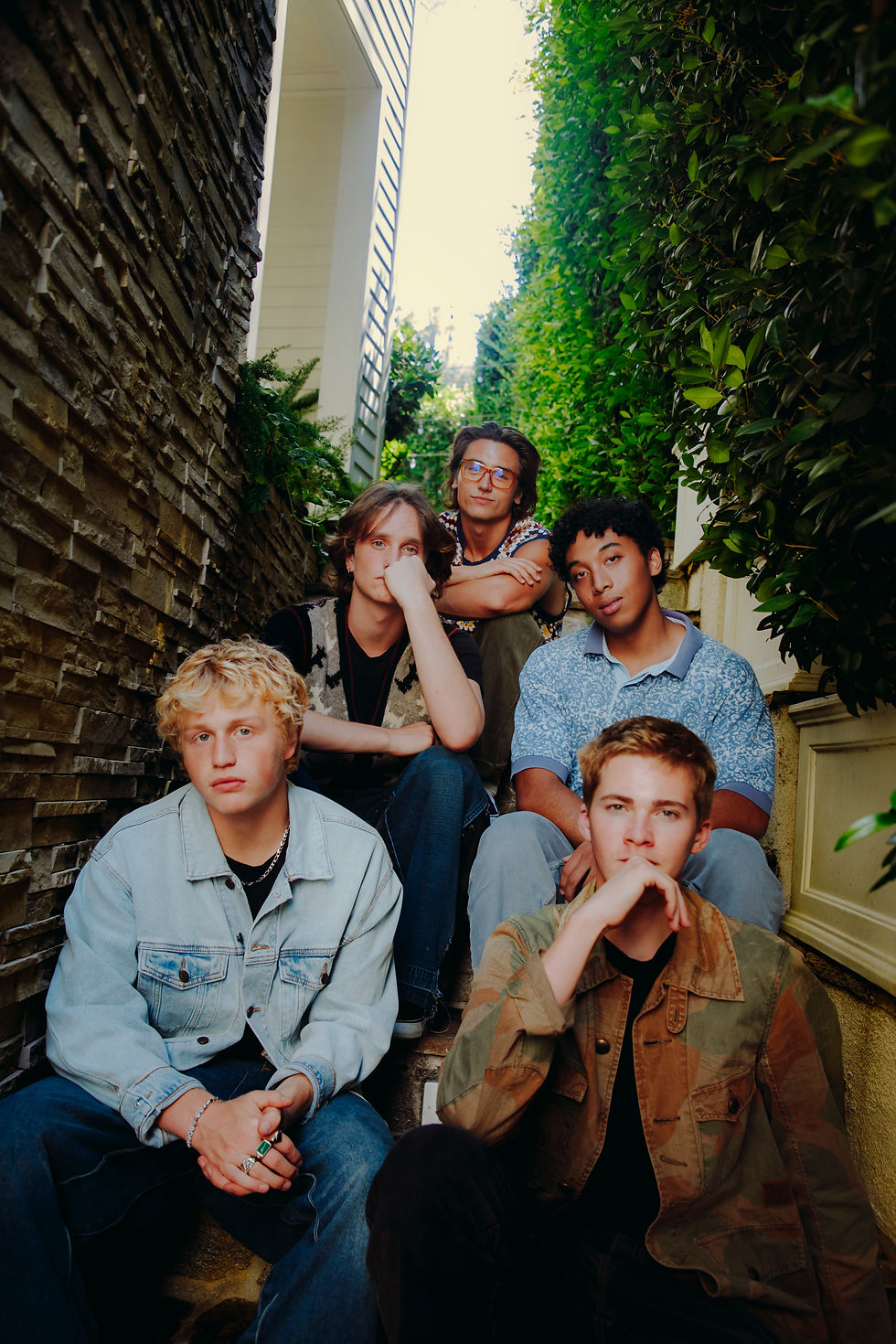
Image: Vasili Papathanasopoulos.
Garrity reflects on the period of time ahead of creating the record, “I feel like going into the album, we had enough time and space to be able to explore different sounds and especially different tempos. We're a very visual, up-tempo centred group. So having the space to release some mid-tempo and slow tracks was definitely what I was thinking. Because when people hear our music, I want them to be able to listen to it under any circumstance, under any emotion that they're feeling. I want them to say, ‘we can listen to Full Circle no matter what.’ That's what I love about some of my favourite artists like Taylor Swift, and Michael Jackson - they have so many songs and they have so many different things. They're so multifaceted. Even with this album, I feel like we just touched on it with a slow track like PROMISES and BEST SHOT. That's what I love about an album, and I know we're gonna continue to do that”. The desire for variety isn't about making the record sound disconnected, but about giving Full Circle Boys more room to be themselves.
“We just kind of made music that we wanted to make, because from POLITE to PROMISES it's actually quite different. So it wasn't like we were like everything has to sound cohesively the same, but I think we all liked the idea of having different levels of mood shifts and emotional shifts. Because I think sometimes that's what people want. They want variety versus everything kind of sounding the same, you know? It's kind of fun to be able to just switch it up whenever we need to. Especially touring and stuff like that, it's gonna be great to pull out the ballad and then pull out the high energy dance,” says Bell. Moon puts that idea even more simply: “I feel like each song is a different mood. You can go to any song on this album at any moment, whatever you're feeling and be like, ‘Oh, I'm sad. Let me go listen to PROMISES. oh, I need to get hype, let me go listen to THE BLEACHERS.’ I think the idea was to make ten songs that - well it just ended up being ten - you can go to at any moment no matter what you're feeling. I mean, we're growing up, we're young adults. Our emotions are changing. We'll be sad one minute, to being really excited the next minute. So it's just all over the place, our moods.”
Perhaps that is the real meaning of the album title. When James Herron first heard it, the phrase had an intentionally provocative quality. “The album is obviously titled YOU NEED TO HEAR THIS. It was written by Dossan and Sean. When they brought this record to us, we were like, ‘Wow, this title is very eye-catching and almost clickbaity.’ So we were like, ‘Why not just make that the album title?’” he says. What began as a hook gradually became something more sincere. “YOU NEED TO HEAR THIS started off with being more of a clickbait thing where it's like, ‘oh, you need to hear this,’ you know? Like, ‘click here’ type thing. Our creative director helped us switch it almost into like when we hear a song and we can find something beautiful in it, we can be like, ‘Oh wow, I needed to hear that.’ So it's more of that direction,” explains Hincy.

Image: Supplied.
That shift feels representative of the record itself. On the surface, there is plenty of confidence: KNACK, ANIMAL, POLITE, THE BLEACHERS. Songs built for movement, flirtation, adrenaline and the particular kind of swagger that comes naturally to a group of dancers who know exactly what they want a song to do to a room. But there is also vulnerability, romance, longing and uncertainty. PROMISES, BEST SHOT and 716 give the album space to breathe. The point isn't that Full Circle Boys have abandoned the energy that first made them recognisable, it is that they have realised they don't have to exist in only one mode.
That is particularly apparent in the way they make music. Garrity describes a process that can change depending on the song and who happens to be in the room. Sometimes one member writes and produces alone. Sometimes two or three of them collaborate. Sometimes outside writers and producers enter the picture. The important thing is that the group has learned how to move between those different spaces without losing their identity. “I think something that's really cool about our process is that we are creating music so many different ways. There's some records on this album that Dossan produced and wrote completely by himself. There's some where it's just two of us wrote it, or three of us wrote it, or we'll bring in writers and producers to help collaborate with us. So I feel like that's something that keeps our process really fresh, is that we're accepting music from all different spaces.” His favourite example is the title track, which he made with Bell. “Dossan and I are both very strong-minded writers, so we hadn't been placed in a room with just the two of us until that record. I think that there may have been a sense from the other boys that we wouldn't be able to collaborate. But I feel like it ended up being the complete opposite. We were just feeding off each other the whole time. There's something about when you're writing music and you are sharing ideas that are not fully fledged yet, that was what was happening in the session, is we were writing and creating ideas and sharing them as we were thinking about it. So we were able to mould our ideas so much to the point where now neither of us can quantify where certain things came from, because we were just riffing off of each other. The flow state was real.” It is the kind of process that makes the album feel less like five individual contributions placed beside one another, and more like a group learning how to trust each others instincts.
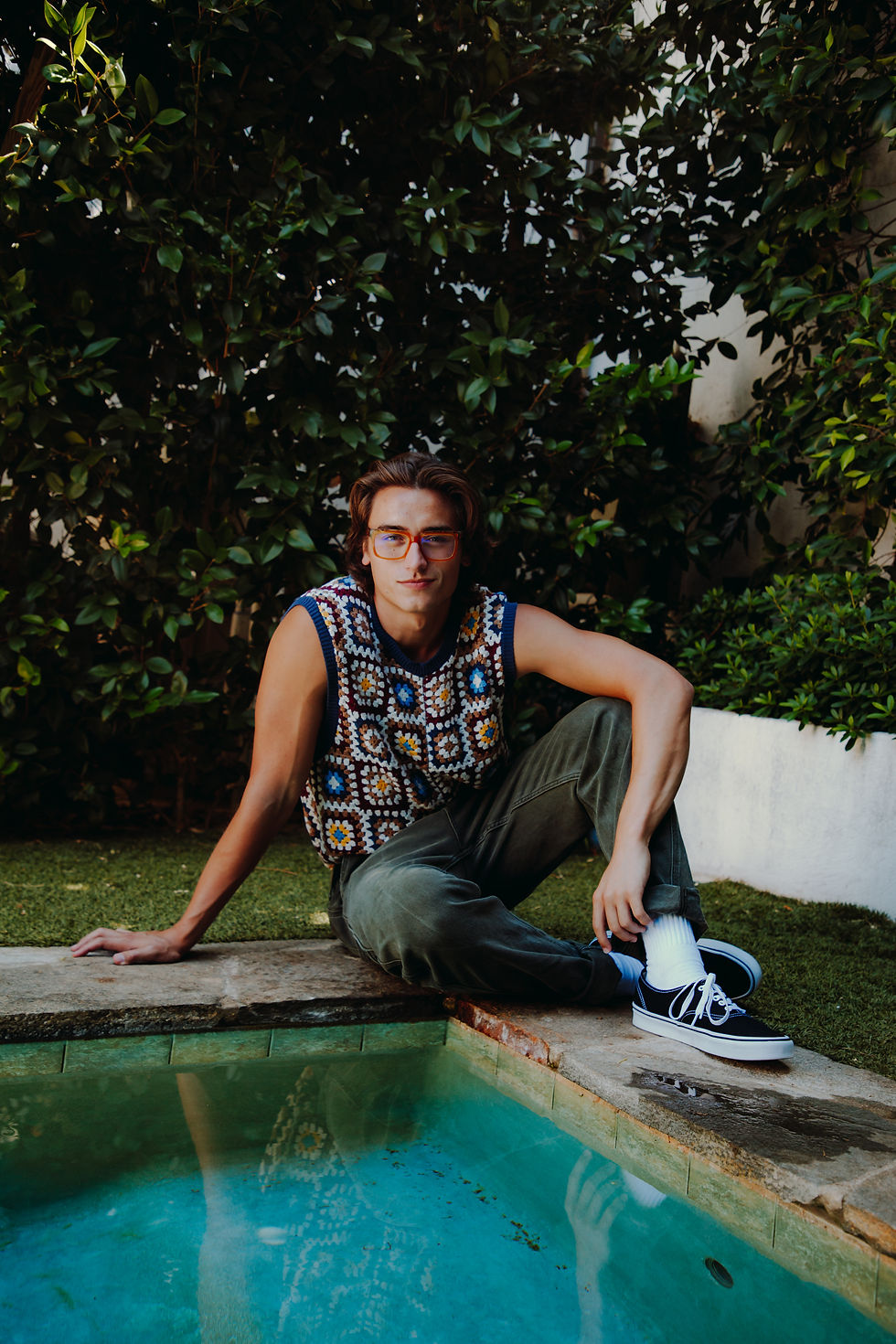
Image: Vasili Papathanasopoulos.
For a group whose members came into this project with such a strong relationship to dance, the physicality of the music was never going to disappear. “I think definitely when we write, or at least for myself, I write from a place of ‘would I want to dance to this?’ So that's where I always stem from,” says Moon. That instinct extends beyond songwriting, even if the actual choreography for this project came with its own challenges. “Very thankful for the choreographers that we've gotten to work with, because we only had to choreograph one of the dances for these visuals. We choreographed KNACK all together, and that was actually insanely hard to do. I don't know why, because we did Call My Name but that was a long time ago. We haven't been in choreography mode in a really long time. So I think it was just a muscle we hadn't worked in a while. It was really tough trying to figure out how to do it, and it's always different. Like I can choreograph any day to anybody else's music, but when it's your music, it's a lot tougher,” he says. That dancer's instinct is built into the songwriting, too. Garrity knows when something isn't moving the way it should. “I feel like it really affects me making music, when the music is supposed to be up tempo and danceable, I feel like we all have a really good perspective and opinion on whether or not something can invoke creative dance ideas. Especially maybe at the top of a session when we're working on a beat or we're working on the instrumental. I feel very confident in injecting my opinion and being like, ‘this is not danceable,’ or, ‘it needs to be more funky.’ I remember that happened a few times on this record. I love to make up some bass lines and whatnot.”
There is a story behind the albums existence that makes all of this feel even more like happenstance. Garrity remembers the moment the group realised they had made too much music for an EP. They were with their creative director and choreographer, Keone Madrid, and had prepared a playlist to show him. The expectation was that he would hear a couple of songs. Instead, they kept pressing play. “I remember the moment where it went from an EP to an album. We were hanging out with our creative director and choreographer, Keone Madrid. We love to play him new music. We were in his office and we had this playlist prepared. He didn't know what we were gonna play, but we'd been working hard and writing a lot more music than ever. So when we were showing him the music, he really thought he was gonna listen to one or two songs. I think we probably played him eight or nine [laughs]. So, song after song, he was just so excited and thinking about what we could do with it. We got towards the latter half, he was like, ‘oh my gosh, wait, I love all of these. We need to do a bigger project. It's time for you guys to do an album.’ That was such a fun moment just to show somebody that we've been working a little overtime and have a bunch of records prepared.” The album wasn't necessarily something they set out to prove they could make; it became the natural consequence of the amount of music they had begun making. What followed was not just a longer collection of songs, but a larger visual world. The band have never treated the music and its accompanying imagery as separate entities, and on this project the two have become increasingly intertwined. Bell sees that relationship as part of what makes this era feel so exciting, particularly as the group watches listeners discover songs through the visuals attached to them. “I feel like one thing that we're really holding onto and that we're really proud of is we're not trying to chase a certain narrative or a certain nostalgia of what we have to be,” he declares. “We obviously do dabble in that. If you listen to SOPHIE, it's very nostalgic. It's got a very nostalgic sound. But we don't feel the need to be any certain thing that anybody thinks we need to be. We're just doing what we love, and then we let the rest happen.”

Image: Vasili Papathanasopoulos.
He is especially excited by what the visual side of the project has allowed them to create. “Our creative director on this last project, Kenny Madrid, he just took this to a place that none of us could have ever imagined,” says Dossan. “Seeing the visuals firsthand, for the first time, all of us were just like, ‘Holy crap, we have something so beautiful right in front of us.’ We're just so geeked that the whole world gets to see what we've been creating. Then to bring it visually to life too with actors Xochitl Gomez, and an incredible dancer-actor like Sophia Lucia. It feels so cool to bring that to life.” The relationship between the visuals and music has become part of the way listeners experience the album, too. “It's also funny because when you have the visuals, then people wanna listen to the songs more and more. If you go to Apple Music right now and you look at the top three songs, SOPHIE, KNACK and ANIMAL, they've all got the little dot on them. So it's cool because the visuals just help drive the music so much more because when you can see something. It helps you connect to it more.”
If there is one place where Full Circle Boys seem particularly convinced that all of this will make sense, it is onstage. Moon calls live performance “the most important thing,” and Hincy agrees: “most important.” For a group whose identity is so closely tied to movement, performance is where all of those different pieces - music, choreography, visuals and personality - have to become one thing. Garrity adds, “Especially where we are as a group right now. It feels like a very unique situation where we're not quite blown up, but we're not at the bottom of the pyramid, per se [laughs]. But even the performance we did last week was really cool because people have a chance to see where we could go, and the opportunity was a bit bigger than we could have put on ourselves. We're capable and we're ready for those kind of things. So it's really cool for especially a lot of young people and a lot of kids who maybe don't have access to social media yet to see a group at the ground level that has aspirations to go all the way.” Moon has even more faith in what happens when people see the group in person. “I also think when you see us live, this is gonna sound really cocky and I don't mean to sound cocky, but when you see us perform, you would think that we'd be at a different level than we are at right now. I feel like we really thrive at performing. You watch us and you're like, ‘how are they not the biggest thing ever?’ That sounds so cocky, but I have a lot of faith,” he says. They aren't pretending they have already arrived; they genuinely believe they are capable of getting there.

Image: Vasili Papathanasopoulos.
The difference between the five guys who sat in that studio two years ago and the group standing behind YOU NEED TO HEAR THIS is perhaps most obvious in what they now understand about being a group. They are independent, but they aren't romanticising independence. There is no giant machine doing the work for them, and Garrity is honest about the complications that come with that. There is no obvious television-show origin story or external gimmick to explain them in one sentence. What they have instead is the growth they have spent the past few years building themselves. “I mean, I feel like... I was gonna say this earlier, because it's actually not an advantage [being independent]. We're kinda figuring out how to navigate this. But compared to the landscape of other groups out right now, I'm not sure what our gimmick is. There's a lot of groups where it's like an elevator pitch. They've been on a TV show or they were put together by this person. On the surface level, if you're pitching us, it doesn't sound as exciting as maybe something else, you know? It's five guys from California and Utah who all grew up together [laughs].” What makes the quote interesting is that Sean doesn't present independence as an easy selling point. If anything, he initially describes it as a complication: without a ready-made story or a machine behind them, they have had to work out how to explain themselves and where they fit.
That uncertainty sits alongside a genuine sense of ownership. “I feel like maybe the independence, at least in the future, might create some leverage for us because we've grown so much and we've been able to put our brains in different aspects of the industry and really be able to appreciate the marketing side of things, or the business side of things that maybe other people in our position have not experienced,” he adds. They have had to learn those parts because they haven't had the luxury of leaving them entirely to someone else. Bell sees the result most clearly in the creative work itself. “I think one of the major pros [of being independent] is, I mean, I don't know technically about all the other boy bands or girl groups or whatever's going on, but I do know that we have a lot of creative freedom. That's one thing I do love, is our fingerprints are on everything we do. We don't really have a ton of people telling us what to do. It's more like, ‘Go do it [laughs].’ It's super nice that we get to be in control of what our creative is and what people see us as versus being a puppet. Because I know that's the industry… this is what you're supposed to do, go do it. But we're literally on the exact opposite end of that,” he says. For all the uncertainty that comes with doing things themselves, there is a clear reward: they can look at the music, the visuals and the way the group presents itself and recognise their own DNA across it. That might be the most important thing YOU NEED TO HEAR THIS leaves behind: not a neat definition of what Full Circle Boys are, but evidence that they have started defining it for themselves. The next stage is about getting that identity out of the studio and into the world.

Image: Vasili Papathanasopoulos.
The group's immediate future is still partly dependent on the machinery around them. They are figuring out touring, working out how to bring the album to stages, and trying to make the most of the opportunities that arrive. But after years of writing, recording, rehearsing, shooting and building, the desire is remarkably simple: they want to perform. “I feel like the past couple months, especially when we finished recording the album, we've just been really focusing on trying to deliver this album safely [laughs]. Because we don't have some massive label behind us that is ensuring that it's gonna be handled with care. I feel like a lot of our creative, especially writing juices, we've shifted energy and shifted focus towards really focusing on the visuals and really making sure that the album gets delivered correctly. Making sure that now that it's out, that people are seeing it in the right way. But in the next year... I really love being in album territory. I feel like we were stuck in single and EP land for a while and now that we're in album territory, I wanna be a group that does a bunch of albums,” says Garrity. Later this month, the five-piece will hit the stage in Manchester, London and Birmingham for a mini UK tour. For Hincy, the immediate goal is even more straightforward. “I just wanna do as many shows as possible. Whether that's open for somebody, or maybe starting our own tour, just shows. I feel like that's what's needed right now for us. We've put out so much music videos and so much music that just deserves to be heard,” he says. Bell agrees: “We need to get out there in person. We need the people to see us, for sure.” After spending so much time building the music, the next part is letting people experience what it becomes when five people are standing in the same room.
Two years ago, Full Circle Boys had aspirations. They had a studio, a growing catalogue, a few songs, and the beginnings of an idea about what this group could become. Now they have an album, and more importantly, they have a record that sounds like five people who have stopped waiting for somebody else to tell them who they are. “It's similar to what Dossan said, it feels so good to be able to have identity. I feel like if we're taking records from other people or if we're writing it ourselves, we have a vision for who we are. We've found that. I don't know how many other groups can say that,” says Garrity. They've found it, and now they want you to hear it.

Image: Vasili Papathanasopoulos.
MILKY EXCLUSIVE COVER STORY ©
Writer: Vasili Papathanasopoulos
Photography - Look One: Supplied.
Photography - Look Two: Supplied.
Photography - Look Three: Vasili Papathanasopoulos
Photography - Live Image: Supplied.

Comments